As consumer demand for fresh food, pharmaceuticals, and same-day delivery continues to rise, urban logistics is undergoing a major transformation. Traditional delivery vehicles can no longer meet the strict temperature requirements needed for modern food safety and cold chain compliance.
This is why cold chain vehicles—including refrigerated vans, mobile cold rooms, and electric refrigerated tricycles—have become essential tools for last-mile urban delivery.
This article explains the key reasons cold chain vehicles are increasingly necessary in dense city environments.

Urban consumers expect rapid delivery of:
Fresh fruits and vegetables
Meat and seafood
Dairy products
Frozen goods
Prepared meals
Temperature-sensitive pharmaceuticals
Online grocery and fresh delivery platforms such as Instacart, Meituan, UberEats, and Zepto have accelerated this shift. To maintain product quality and shelf life, temperature must remain stable from warehouse to doorstep.
Cold chain vehicles ensure continuous temperature control throughout this journey.

Most countries now enforce strict cold chain regulations.
For example:
Fresh food: 0–5°C
Frozen food: -18°C
Ice cream: -25°C
Pharmaceuticals: 2–8°C
Without proper insulated compartments and active cooling systems, food temperatures can rise within minutes—especially in hot climates or during traffic congestion.
Cold chain vehicles maintain compliance by offering:
Real-time temperature monitoring
Fully insulated compartments
Compressor-based refrigeration units
GPS + temperature data logging
These features help avoid spoilage, contamination, and legal penalties.


Urban environments present unique delivery challenges:
Traffic congestion
Limited parking
Restricted access roads
Short delivery distances
Frequent stop-and-go driving
Traditional trucks struggle in these conditions, leading to:
Longer delivery times
Temperature fluctuations
High fuel consumption
Difficulty accessing narrow streets and alleys
Cold chain vehicles—especially electric refrigerated tricycles—offer unmatched flexibility:
Small size
Easy maneuvering
Low operating cost
Zero-emission access to city centers
They can deliver quickly even in congested areas while maintaining stable temperatures.

Spoilage and rejected goods are major cost drivers in the food industry.
Cold chain vehicles reduce this risk by:
Preventing temperature shocks
Maintaining product freshness
Extending shelf life
Reducing returns and customer complaints
In addition, electric cold chain vehicles significantly reduce:
Fuel costs
Maintenance expenses
Labor time spent on reloading or replacement
Total operational cost per delivery
For high-frequency urban distribution, these savings quickly add up.
Dark stores and front distribution warehouses (前置仓) are rapidly expanding in major cities.
These small but strategic warehouses require:
Fast restocking
Stable temperature control
High-frequency multi-drop delivery
Reliable short-distance transportation
Cold chain vehicles make this model possible by enabling continuous low-temperature delivery between warehouses and customers—without breaking the cold chain.
New-generation cold chain vehicles support multi-compartment temperature zones, such as:
Frozen (-18°C)
Chilled (0–5°C)
Ambient (15–25°C)
This allows a single trip to deliver diverse products to multiple customers, improving efficiency and reducing logistics cost.
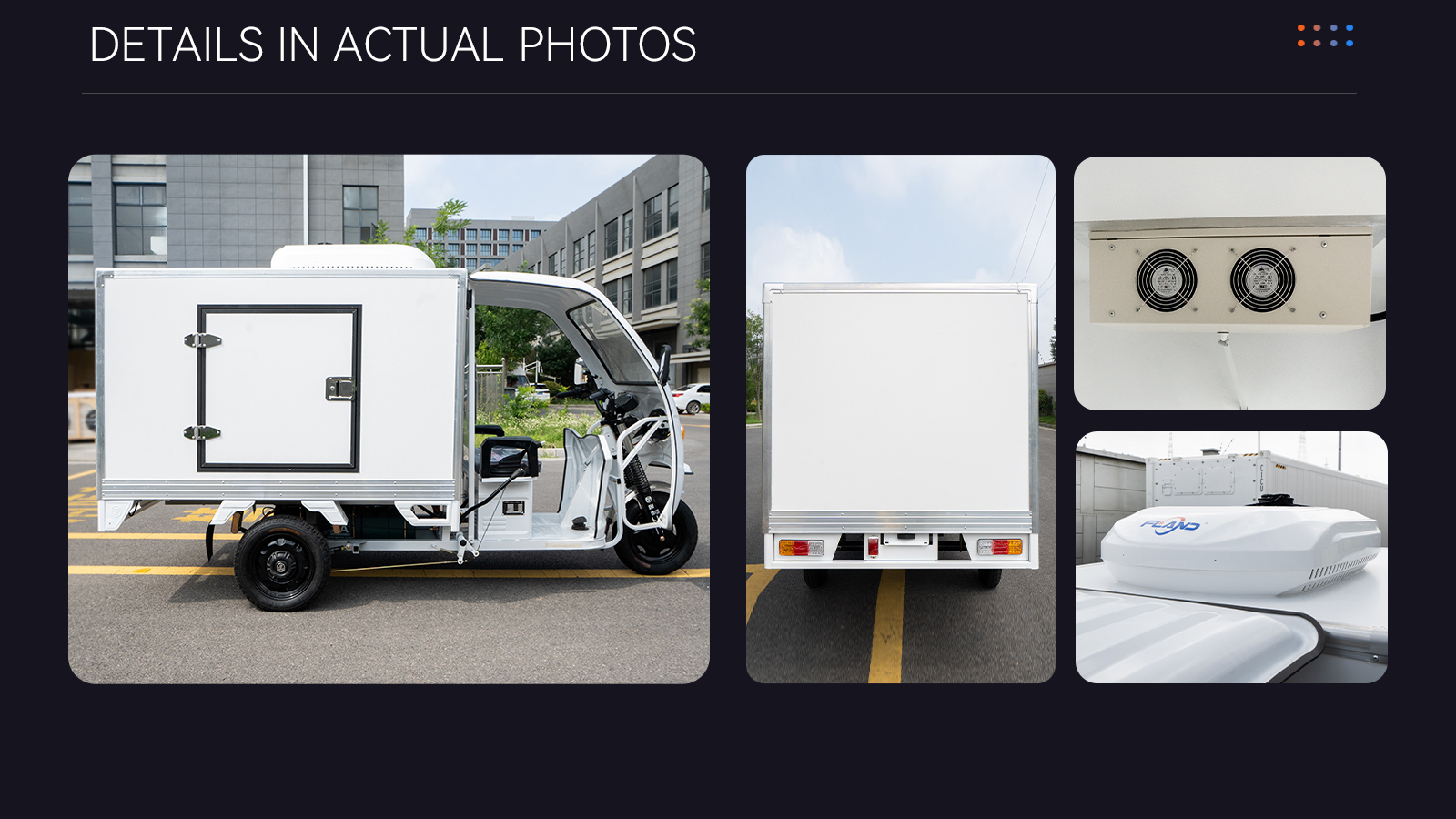
With urban emission limits tightening, electric cold chain vehicles offer:
Zero tailpipe emissions
Reduced carbon footprint
Silent operation (suitable for night deliveries)
Lower charging cost compared to fuel consumption
Cities like Singapore, Paris, Dubai, and Shanghai already support electric cold chain fleets with charging infrastructure and policy incentives.
Modern cities demand fast, safe, and temperature-stable delivery.
Cold chain vehicles provide:
Continuous temperature control
Reliable food safety compliance
Lower operating costs
Flexibility in narrow and crowded areas
Multi-temperature delivery options
Better environmental performance
As fresh food e-commerce, pharmaceuticals, and urban warehouses continue to grow, cold chain vehicles will become an indispensable part of every city's logistics ecosystem.
FLAND provides:
Electric refrigerated tricycles
Mobile cold rooms
Integrated refrigeration units
Container cold storage solutions
Full cold chain delivery system design
Contact us for a complete cold chain delivery solution tailored to your city.